Outer Banks septic guide
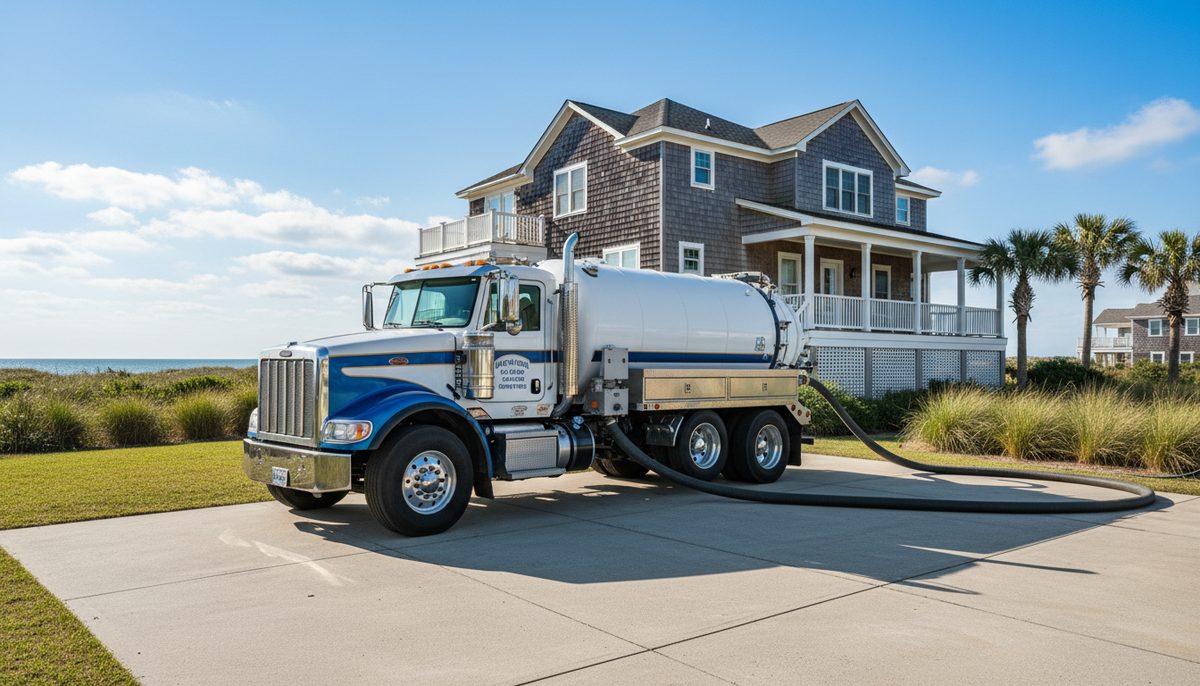
What a real septic pumping visit actually includes
The difference between a full pump-out with inspection and a partial 'top-off': covers opened, baffles checked, layers measured, records written.
There are two services sold under the name 'septic pumping' on this beach, and only one of them protects the drainfield. The cheap one opens one small port and pumps until the hose runs clear. The real one opens both access covers, empties the whole tank, inspects what the covers were hiding, and leaves you a record of what it saw.
The details
Here is the visit in order. We locate and expose the inlet and outlet covers — the little green lid people mow around is usually a monitoring port, not an access, and opening both covers is the difference between pumping a tank and emptying part of one. We pump the full contents, then wash the interior down. Then comes the part the cheap version skips: the baffles or tees get checked, because they are the two parts standing between your drainfield and everything the tank was holding back; the tank gets inspected for cracks, root intrusion, and saltwater infiltration; the scum and sludge layers get measured, which is how the next interval gets set from data instead of folklore. Before we backfill, you hear the findings in plain language — what is intact, what is wearing, what needs a repair — and the written service record goes to you, built to be handed to a rental manager, an inspector, or an attorney.
Why the full version is the one that matters here: G.S. 130A-335 makes the approved system the owner's legal obligation, and Dare County Environmental Health Services is where the county's records of that system live. A pump-out that inspects nothing produces a receipt; the one that inspects everything produces evidence — about a baffle that would have failed in August, about a tank that storm surge got into, about a drainfield that is quietly telling you its age.
When you compare prices, compare the two lists — the covers opened, the baffles checked, the layers measured, the record written — not the two numbers.
On the record: G.S. 130A-335 (N.C. General Statutes 130A-335 (ncleg.gov)) · Dare County Environmental Health Services (Dare County NC — Environmental Health Services (darenc.gov, retrieved 2026-09-17)) · wastewater permit search (Dare County NC wastewater permit search (both portals verified live 2026-09-17)) · 120 gallons per day per bedroom (Septic Tank Pumping Cost NC (2026), Septic & Well Pro) · every 2 to 3 years (Septic Tank Pumping Cost NC (2026), Septic & Well Pro)
Hand-verified 2026-09-17 against the primary sources named above; where a fact could not be verified it was left out, never guessed.